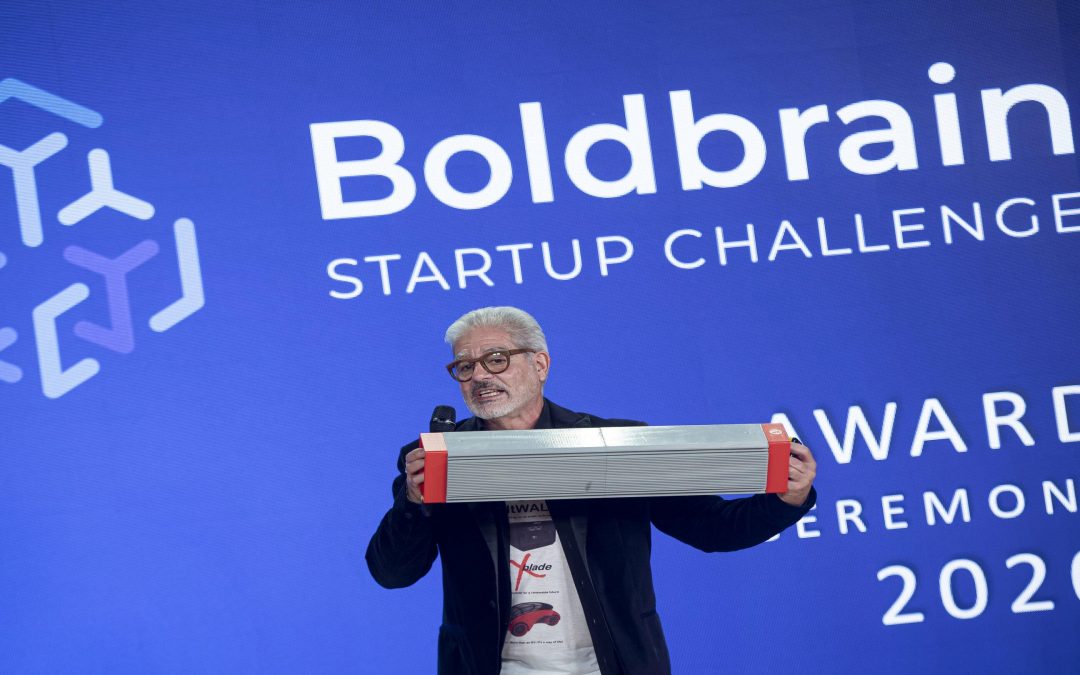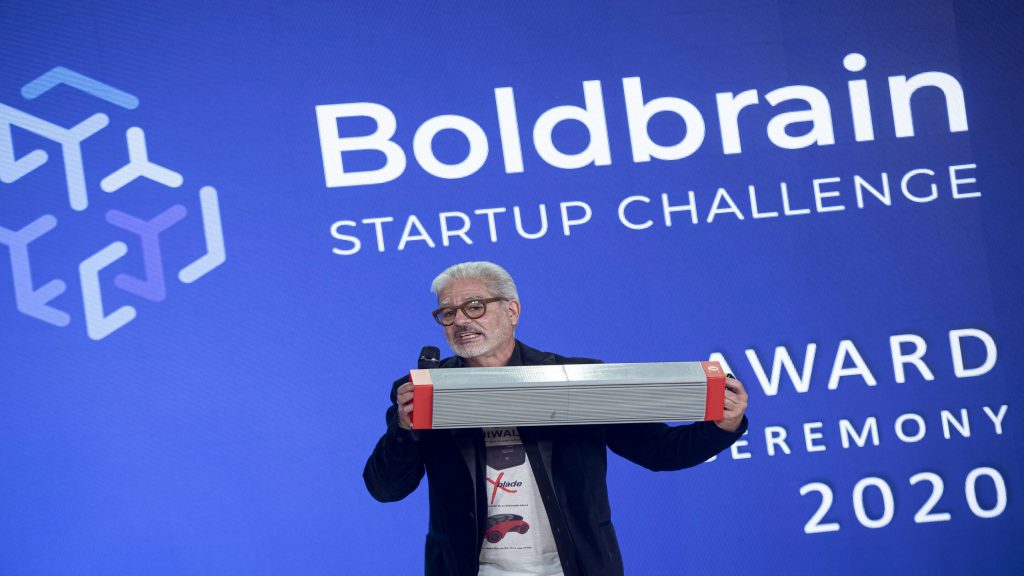
voltWALL : winner of Boldbrain Startup Challenge 2020

voltWALL : winner of Boldbrain Startup Challenge 2020

voltWALL : winner of Boldbrain Startup Challenge 2020

EMBA Scholarship

Boldbrain Startup Challenge is a new accelerator program in Ticino organized jointly by Fondazione Agire and Centro Promozione Start-Up USI. December 3 at 19:00, the fourth edition was concluded with an award ceremony on streaming.

The winner of 52.000 CHF and of the full EMBA Scholarship is voltWall, energy solar systems.

voltWALL stores 10 years worth of data internally and updates the cloud infrastructure in real-time whenever connectivity is available. This means that they are able to detect most issues before they happen and send a technician to ensure optimized performance.


GET YOUR LEAN SIX SIGMA BELT IN 3 DAYS!

GET YOUR LEAN SIX SIGMA BELT IN 3 DAYS!

GET YOUR LEAN SIX SIGMA BELT IN 3 DAYS!

Lean Six Sigma is a must for businesses of every size as it makes quality a quantifiable statistic. It enables businesses to observe and study processes in a scientific way with the end goal of eliminating waste.

Get your Lean Six Sigma belt now: emba@usi.ch

When: 3, 4, 5 December 2020

Thursday 3 December:

01:00 pm – 09:00 pm

Friday 4 December:

01:00 pm – 09:00 pm

Saturday 5 December:

01:00 pm – 09:00 pm

Write us to get the Zoom link: emba@usi.ch

WHAT YOU WILL LEARN :

Lean, Six Sigma Design (DFSS), and Six Sigma Innovation (DMAIC) methods provide complementary approaches. When strategically linked, these yield customer-driven, highly resource efficient processes and products with almost perfect performance. Integrated DFSS, Innovation, and Lean approaches provide a highly structured strategy for acquiring, assessing, and activating customer, competitor, and enterprise intelligence that lead to superior product, system or enterprise innovations and designs that provide the organization with a sustainable competitive advantage.  Useful background for this course includes exposure to introductory statistical methods and quality management principles.

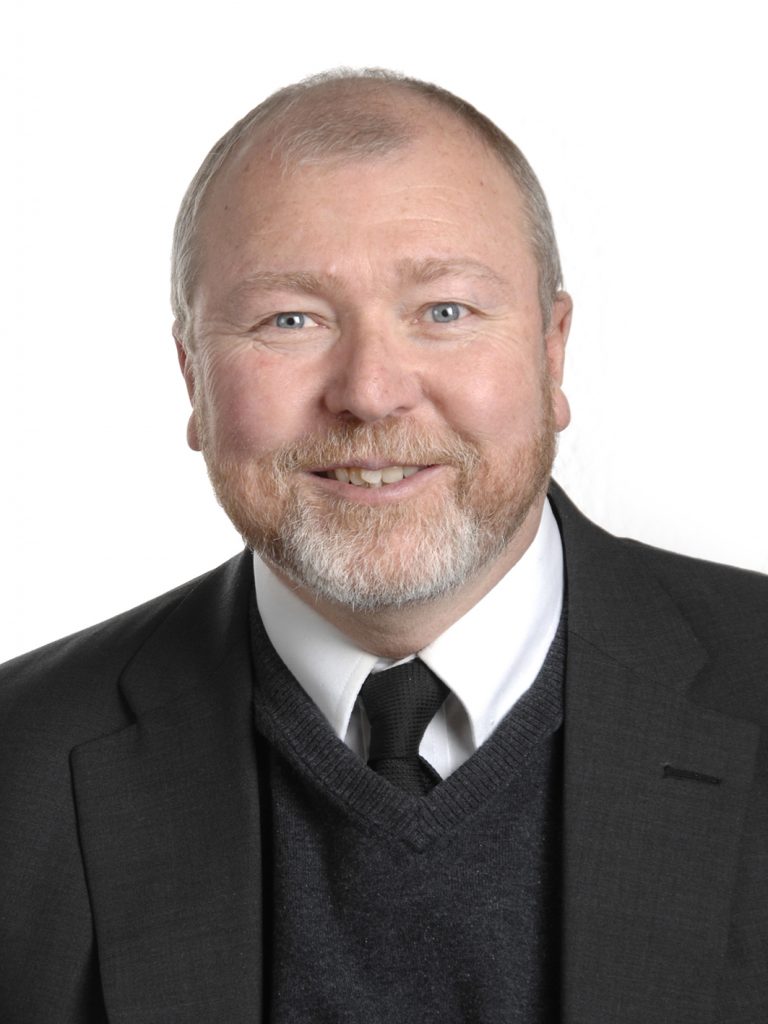
Professor Rick Edgeman

Rick Edgeman, PhD, Professor & Chair, Management Department


Rick L. Edgeman (born 1954) is an American statistician and quality professional, and Professor of Sustainability & Performance at AU Herning and in the Interdisciplinary Center for Organizational Architecture, at Aarhus University, School of Business and Social Sciences. He primarily known for his work on Quality ManagementPerformance Management, and within the recent years Sustainable Enterprise Excellence (SEE)

Robbins College of Business & Entrepreneurship – Fort Hays State University

Business Development & Technology Department
School of Business & Social Sciences    Aarhus University (Denmark)

University of Southern Denmark (Odense, Denmark)

Academician of the International Academy of Quality (IAQ)


EDUCATION

PRICE

2.700 CHF

Women on the move – Melina Schatz

Women on the move – Melina Schatz

Women on the move – Melina Schatz

Melina, what is your current position?

I am currently working as a Sales Trader with the rank of Assistant Vice President in a bank in Lugano.

How the EMBA helped you creating your startup and contributed to your passions?

The EMBA helped me to understand how to create a Start-Up, and to recognize whether or not this Start-Up will have a chance on the market. In the meantime, it has helped me to continue believing in my dreams and passions, infusing courage and determination.

Why you decided to start an EMBA?

I decided to start the Executive MBA because I wanted to get to know how to create a Start-up and because I understood that having a valuable degree in my pocket is an investment for the future.

I was thinking of postponing the EMBA program at a certain point, but at the end I was convinced by the fact that I could have stopped at any moment if I was unable for any reason to follow the program, so I decided at the last moment to try it, and I will never regret it!

How you balanced personal life, sport and study?

I was always very interested in different kind of sports and activities. During the EMBA time, I was principally active in the Triathlon Team Ticino, and this gave me a good balance to cope with all the tasks I was facing.
It is not always easy to manage a full time job, study for an EMBA, perform in sport and manage a private life, but I was surprised how good I could cope with all this, having  my agenda well organized and inspired by the excitement I felt.

I also want to mention, that I did not know where the energy came from, but I was also able to pass an exam for my work during the same time I did the EMBA. This was amazing and it turned out to be much easier than expected.

Describe yourself before and after EMBA in three words

Before EMBA: ambitious, naïve, dreamer.

After EMBA: self-confident, aware, and successful.

How the program changed your mindset and your vision?

After EMBA, I realized better, what really matters in my life and what maybe is not so important to achieve. For several years, I have always chased after something without really understanding why it was so important for me, now I try to spend my energy only in that what I really want and love.

The EMBA also confirmed to me that you do not have to be afraid of something very challenging, if you really care, try it first and then you will see the result.

Would you suggest an EMBA to women? Why?

I highly recommend EMBA for women. EMBA is not only a degree; it is a school of life.
Nowadays for women it is very important to have a good education: you gain a better future and independence, more freedom on deciding what is good or not for yourself.
I am also an active member of “100 Women in Finance” since 2017, an additional way to be supported and to support other women in professional life and not only.

Free Webinar- DOUBLE DISRUPTION & NEW SKILLS 2025

Free Webinar- DOUBLE DISRUPTION & NEW SKILLS 2025

Free Webinar- DOUBLE DISRUPTION & NEW SKILLS 2025

02 December 12:00- 13:30, ZOOM

According to the World Economic Forum’s Future of Jobs Report, 50% of all employees will need reskilling by 2025, as adoption of technology increases.
Half of employees will need to reskill in the next five years, as the “double-disruption” of the economic impacts of the pandemic and increasing automation transforming jobs takes hold.

JOIN OUR WEBINAR ON ZOOM

With Professor Colombo (USI) , Professor Lanzolla ( CASS Business School) Professor Wezel (USI ) and Professor Godart, ( INSEAD).

Source: Future of Jobs Report 2020, World Economic Forum

TOP SKILLS FOR 2025

  • Analytical thinking and innovation
  • Active learning and learning strategies
  • Creativity, originality and initiative
  • Technology design and programming
  • Critical thinking and analysis
  • Complex problem-solving
  • Leadership and social influence
  • Emotional intelligence
  • Reasoning, problem-solving and ideation
  • Systems analysis and evaluation.

Professor Gianvito Lanzolla

Gianvito Lanzolla is Professor of Strategy at Cass Business School, City University London, which he joined in April 2006. He currently serves as the Head of the Faculty of Management and he is the Founder and Director of the Cass’s Digital Leadership Research Centre (DLRC). Before joining Cass Business School, Professor Lanzolla served on the faculty of the London Business School. Over the years, Professor Lanzolla has had several visiting appointments at leading business schools including Hyderabad’s Indian School of Business, Berlin’s ESMT and University of Bologna.

Professor Gianluca Colombo

Prof. Gianluca Colombo is Dean of the Faculty of Economics and Professor of Economics at USI. He is also the Head of the Institute of Management and Director of AMC – Advanced Management Centre Institute of Management.

He is member of the SMS (Strategic Management Society), the AIMS (Association Internationale de Management Stratégique), the EURAM ( European Academy of Management) and the SDS (System Dynamics Society).

Research and teaching interests include family business, entrepreneurship and strategy formulation. The professor held different positions in Italy and visiting positions in France and Finland before joining USI. He has extensive consulting experience in a range of industries.


Professor Filippo Carlo Wezel

Prof. Filippo Carlo Wezel was appointed Professor of Organization theory at the Faculty of Economics in September 2009. He is also Permanent Visiting Professor at EM Lyon (France) and Senior Extra-mural Fellow of CentER (Netherlands). With a PhD in Management from the University of Bologna, he previously held appointments at the University of Groningen (post-doc) and at Tilburg University (assistant and, then, associate professor). He acquired further academic experience as visiting researcher/professor at the Wharton Business School (University of Pennsylvania, USA), at the Hong Kong University of Science and Technology (HKUST) and at Lille I (France). His teaching interests include organizational theory and organizational behavior, which he has taught at the undergraduate, master, PhD and executive levels. His research focuses on organizational diversity, inter-firm mobility, and industry emergence. He won the Credit Swiss teaching award in 2008.


Professor Frédéric Godart

Frédéric Godart is an Associate Professor (with tenure) of Organizational Behavior at INSEAD. He received his PhD in Sociology from Columbia University in the City of New York. He also holds an MPhil in Social and Political Sciences from the University of Cambridge (Trinity College) in the United Kingdom, an MSc in Management from Sciences Po Paris, and was a student (“normalien”) at the Ecole Normale Supérieure de Paris-Saclay. In 2011, he received the French national accreditation to supervise PhD-level research (“Habilitation à Diriger des Recherches” or HDR) from Paris-Dauphine University. He has held various academic positions at HEC Paris (where he was the Academic Director of the HEC Luxury Certificate sponsored by Kering), the Università della Svizzera Italiana in Lugano (Switzerland), Sciences Po Paris, the Università di Bologna (in Italy), and the University of Southern California (USC) – Marshall School of Business.


Women on the move – Alessandra Juri Zanolari

Women on the move – Alessandra Juri Zanolari

Women on the move – Alessandra Juri Zanolari

Alessandra, what is your current position?

Deputy Director of Adolfo Juri Elettronica Industriale SA, my family-run Electronics Manufacturing Services company based in Ambrì.

Why you decided to start an EMBA?

For about fifteen years, I had been working as a language teacher in the Secondary School but, in 2011, I decided for a career change and joined my father in the management of our family-run business. After a few years of very enriching field-based learning, I felt I needed to put my practical experience into a broader framework, in order to enhance my knowledge and skills and be perfectly ready to undertake the challenging management change within the company.
To this purpose, I was aware of the importance of exploring in depth the academic approach on selected topics and issues, and at the same time taking advantage of the ready-to-use insight offered by the EMBA practical business simulations, in order to improve and refine the broad range of leadership and managerial skills required nowadays to be at the head of an organization. That’s how I finally decided to invest in myself and enroll in the EMBA program at USI, since it offered exactly what I needed, an academic approach well-balanced between practice and theory.

Which challenges did you meet?

The most challenging part of it was the time commitment and the stressful pace of life it requires. All along the EMBA period, there’s no free time left, nor for yourself, neither for your family, friends or hobbies. This can be very tough to cope with for almost two years. Apart from that, I’m a passionate student and I love acquiring new knowledge, so I found this experience really exciting. The classes were generally extremely stimulating and learning based on group-work activities was absolutely engaging, as well as networking in a high-level and multi-industry international setting. I also particularly appreciated the closeness with professors who have been incredibly supportive and helpful to assist and guide us. The outcome was very positive and it largely balanced the difficult challenges you have to face in rescheduling your private and professional daily routine.

How the program changed your mindset?

It definitely made me more prepared and skilled since I had the opportunity to attend courses that I had never taken before, Statistics, Corporate Finance, Entrepreneurship, Strategy, Negotiation, just to mention a few, which allowed me to acquire a good applicable knowledge in all areas of business management. But more than that, having gained in self-confidence, the most relevant improvements involved my entire attitude and awareness towards my career and my role within my company, which enhanced my leadership skills and decision-making ability in times of uncertainty and fast changes. It’s really a mindset growth that you learn to tap into, inclined to reflection but oriented to practical problem-solving, strategically better focused and more able to deal with and solve complex relationships and business problems.

Family, work, study balance: what can you tell us?

As mentioned above, because of the great amount of time invested into classes, workshops, assignments, individual study and exams, it’s very complicated to manage your family and work as efficiently as usual: from this point of view, the EMBA experience can become a very disruptive and messy period of time in your life and it’s essential to be surrounded by people who support you and help you staying focused on your choices, efforts and goals. I have been lucky enough to have had a very cooperative family behind me, as well as a very comprehensive boss at work.

Would you suggest an EMBA to women? Why?

Definitely yes. By the way, I would recommend an EMBA to anyone, but I think it could be even more important for women. Unfortunately, it’s still very challenging for women to reach positions at the highest level of organizations, and when they do, their job is often times underestimated and this weakens their self-confidence, even when there are highly performing and it’s commonly known that their contribution is a great added-value for companies and society itself. It’s fundamental that women themselves engage into a change of mindset, share their experiences and acquire new tools to compete and struggle for it, and this is the powerful purpose that women can successfully fulfill through an EMBA.

USI Executive MBA is going international

USI Executive MBA is going international

USI Executive MBA is going international

USI EMBA is proud to announce the release of its new branded Russian and Arabic websites.

RUSSIA

Russia has a great cultural heritage and a very lively and diverse cultural life.

Cultural exchanges with Switzerland are vibrant. There are also strong commercial and economic relationships.

Russia, in fact, represents a considerable market with a high potential for Swiss companies, and it is committed in stopping sanctions led by Europe and USA.

Moreover, we had in the past and current editions many participants from Russia that is why we strongly believe that we can build a strategic partnership of mutual benefit and enrichment with this beautiful country.

Our Russian EMBA chapter is located between Moscow and Saint-Petersburg, the two most vibrant and cosmopolitan cities of European Russia.

Here you can see our website in Russian: http://emba-usi.ru/


UNITED ARAB EMIRATES & SAUDI ARABIA

UAE and Saudi Arabia are important partners for Switzerland because of their role in the world economy, the Muslim world and the Middle East. The two countries have strengthened relations in recent years and improved the conditions for trade.

United Arab Emirates and Saudi Arabia are also considered to be among the fastest growing economies in the world.

Dubai and has a reputation for being a forward-thinking and visionary city and has been the destination of our international module.
Dubai is a global hub for financial services, logistics, tourism, hospitality, and trade, and is steadily growing other sectors including healthcare, technology and clean energy.

Our Emirates chapter is developed between Dubai and Abu Dhabi.

Read the interview of Slaven Klarin Smiljanic, EMBA2, CFO Fiat Chrysler Automobiles Middle East: https://www.emba.usi.ch/slaven-klarin-smiljanic/

These countries inspire our EMBAs with their entrepreneurial and innovative spirit.

Website in Arabic: http://www.embausi.com/ar/