Daredevil Negotiator – Overcoming Blindspots in a Negotiation. EMBA Talks on 12.05, 12:30

Daredevil Negotiator – Overcoming Blindspots in a Negotiation. EMBA Talks on 12.05, 12:30

EMBA Talks | 12 May 2026 | 12:30 PM (Online)
Registration

To enroll, please write to: emba@usi.ch to receive the Zoom link.

We envision EMBA Talks as a series of events that combine academic expertise with open dialogue, focusing on relevant and timely topics in management, finance, marketing, society, and leadership.
Each session centers on a key theme and features an EMBA professor or EMBA alumni, who introduce the topic through a short presentation followed by an interactive discussion with participants. The goal is to create a space where ideas can be shared, challenged, and explored together.


Daredevil Negotiator – Overcoming Blindspots in a Negotiation

Daredevil – is a blind superhero from the Marvel universe. However, in reality every negotiator has to be a Daredevil, while being blind about information and interests of the other side, the negotiator is expected to achive superhero-like results. In every negotiation, what derails outcomes isn’t just the other side—it’s the unseen biases shaping your own decisions. This interactive session challenges participants to become “Daredevil Negotiators,”  by sharpening awareness beyond the obvious and navigating what cannot be easily seen. The session equips negotiators with practical techniques to detect, disrupt, and outmaneuver these mental blind spots, transforming instinct into insight and reaction into strategy. Because the most dangerous thing in a negotiation isn’t what you don’t know—it’s what you don’t realize is controlling you.

Speaker

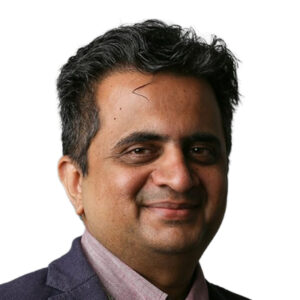
Kandarp Mehta is a PhD from IESE Business School, Barcelona. He has been with the Entrepreneurship Department at IESE since October 2009.
His research has focused on creativity in organizations and negotiations. He frequently works as consultant with startups on issues related to Innovation and Creativity. His doctoral thesis was about the process of creativity in the context of motion picture industry.
He has conducted several Negotiation and Creativity Workshops for corporate executives and management students in Europe, USA and India. Before coming to Spain, he was at ICFAI Business School in India where he taught Corporate Finance. He is also actively involved with Creative Industries.


Workshop on Artificial Intelligence: Trends, Themes, and Strategic Adaptation, 08.05

Workshop on Artificial Intelligence: Trends, Themes, and Strategic Adaptation, 08.05

EMBA Workshop | 8 May 2026 | 17:30 – 19:30
Registration

To enroll, please write to: emba@usi.ch attaching your CV.

Artificial Intelligence is rapidly reshaping industries, yet many organizations struggle to move beyond fragmented adoption and short-term experimentation. Emerging trends—such as generative AI, automation at scale, and data-driven decision-making—are redefining competitive advantage while introducing new operational and ethical risks. As AI continues to evolve, the challenge for leaders is no longer whether to adopt it, but how to do so in a way that is both strategic and sustainable.

On May 8, from 17:30 to 19:30, the USI Executive Center will host an in-person EMBA Workshop led by Professor Gianvito Lanzolla, offering a timely opportunity to engage with these critical developments. The session will provide a senior leadership perspective on how AI is transforming business models, competitive dynamics, and organizational structures across industries.
Designed as an interactive and practice-oriented session, the workshop will bring together professionals and leaders to exchange insights, challenge assumptions, and explore concrete approaches to strategic adaptation. Participants will gain a clearer understanding of how to prioritize AI initiatives, align them with business objectives, and develop the capabilities required to capture value while managing uncertainty and risk.

The session will conclude with an aperitivo, creating an informal setting to continue the conversation and foster meaningful connections among participants.


Why Leaders Starve the Capabilities They Need Most? EMBA Talks on 14.04, 12:30

Why Leaders Starve the Capabilities They Need Most? EMBA Talks on 14.04, 12:30

EMBA Talks | 14 April 2026 | 12:30 PM (Online)
Registration

To enroll, please write to: emba@usi.ch to receive the Zoom link.

We envision EMBA Talks as a series of events that combine academic expertise with open dialogue, focusing on relevant and timely topics in management, finance, marketing, society, and leadership.
Each session centers on a key theme and features an EMBA professor or EMBA alumni, who introduce the topic through a short presentation followed by an interactive discussion with participants. The goal is to create a space where ideas can be shared, challenged, and explored together.


Why Leaders Starve the Capabilities They Need Most?

Organizations often remain stuck in cycles of firefighting and short-term fixes, underinvesting in the capabilities that drive long-term performance. Research on capability traps shows how this pattern emerges from everyday resource allocation decisions.
This study identifies a framework that determines whether capability investments succeed or fail. The framework provides executives with a practical lens to prioritize capability building, allocate resources more effectively, and design strategies that avoid persistent underperformance while enabling sustainable growth.

Speaker

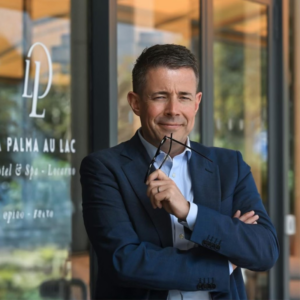
Paulo Gonçalves is Professor of System Dynamics and Management at USI and Director of the Executive MBA. He is a Research Fellow at the University of Cambridge Judge Business School (CJBS) and a former Research Affiliate at the MIT Sloan School of Management.

His research combines System Dynamics Simulation, Behavioral Experiments, and Econometrics to understand how managers make decisions in humanitarian settings. Currently, he has been developing supply chain experiments to understand and improve managerial decisions in humanitarian operations.

He holds a Ph.D. in System Dynamics and Management Science from MIT Sloan and a M.Sc. from MIT. Prior to USI, prof. Gonçalves held appointments at the MIT Sloan School of Management and the University of Miami Graduate School of Business.

While at Sloan, Paulo worked with Intel’s Strategic Capacity group as an Intel scholar. For his work, he has received the Intel Foundation Graduate Research Fellowship Award (2003-2004). For his dissertation, he has won the 2004 Doctoral dissertation award given annually by the Council of Supply Chain Management Professionals (CSCMP).

The Superpower of Networking: Strategy, Mindset, and Real Opportunities

The Superpower of Networking: Strategy, Mindset, and Real Opportunities


EMBA Class 12 at the Gotthard Tube: Strategy and Sustainability at Marti Tunnel

EMBA Class 12 at the Gotthard Tube: Strategy and Sustainability at Marti Tunnel

EMBA Class 12 | Field Visit | Infrastructure & Sustainability


Class 12 had the privilege of visiting the Marti Group’s construction works at the Gotthard highway tunnel doubling — southern lots — in Airolo. What unfolded was far more than an engineering spectacle. It was a masterclass in strategy, coordination, and sustainable thinking at scale.


A century of building excellence

Founded in 1922 as a small family business, the Marti Group has grown over a century into one of Switzerland’s leading construction conglomerates, today comprising more than 80 affiliated companies and over 6,000 employees operating across Switzerland and internationally. From the Bern train station reconstruction in 1958, to the Felsenau bridge in 1972, CERN in 1980, and the Prime Tower in Zurich in 2011, Marti has left its mark on the landmarks that define modern Switzerland.

What has remained constant throughout this remarkable growth is the group’s federal structure: independent subsidiaries, each expert in their field, strengthened by central coordination. This model allows Marti to deliver fully integrated solutions — from initial concept to final handover — without relying on external partners for critical workstreams.


The project: a second tube through the Alps

The Gotthard Road Tunnel, open since 1980, is a vital artery in Europe’s north-south transport corridor. After four decades of intensive use, the original tube requires a comprehensive refurbishment — a task impossible to carry out while it remains open to traffic. The solution: build a second parallel tube, open it by 2030, and only then undertake the renovation of the first.

The new tunnel stretches 7.8 km on the southern section alone and involves excavation through some of the most geologically challenging terrain in the Alps. 


Engineering at the frontier: the tunnel boring machine

The centrepiece of the southern operation is a tunnel boring machine (TBM) measuring 128 metres in length, with a cutting head diameter of 12.36 metres — roughly the width of a four-lane motorway. Transporting this machine to the Airolo site required multiple special convoys, meticulous logistical planning, and close coordination across several cantons.

Once assembled and launched from the consolidated southern portal — where specialist piles installed by Marti Bern have already secured the tunnel entrance and the first 100 metres of launch tunnel have been excavated — the TBM will advance at an estimated pace of 20 metres per day, with breakthrough planned for 2027.

The project’s greatest geological challenge lies approximately 4.9 km from the southern portal: a 340-metre disturbance zone known as “de Guspis”, where the rock is particularly friable. This zone will be crossed and secured under the main lot 341, requiring careful sequencing and pre-consolidation measures.

For an EMBA cohort trained to think in systems, the visit offered a rare opportunity to see systems thinking in action. The Gotthard project is, at its core, a study in managing complexity: multiple lots running in parallel, a multi-company consortium operating under shared accountability, real-time decision-making under geological uncertainty, and a constant need to balance regulatory, environmental, and community stakeholder demands.

A special thank you to EMBA Alumnus Roberto Zanoli,  Project Manager at Marti Tunnel.


The second Gotthard tube is scheduled to open to traffic in 2030. For those who had the privilege of seeing it from the inside — in every sense of the word — it stands as a reminder of what becomes possible when engineering ambition, organizational discipline, and genuine commitment to sustainability converge.

EMBA Talks on Organizational capabilities. 04.03, 12:30

EMBA Talks on Organizational capabilities. 04.03, 12:30

EMBA Talks | Wednesday 4 March 2026 | 12:30 PM (Online)


Why do organizations that know they need to transform so often fail to do so? And what does it take — personally and professionally — to navigate new processes, disrupted supply chains, and regulations that arrive too late?

These are the questions at the heart of this upcoming online event, featuring two USI EMBA alumni who will share their first-hand experiences from the front lines of organizational change.

Speakers

Valerio d’Ettorre is Head of Production and Client Consultant at Witschi & Ritz Crossmedia AG, a printing and packaging company based in Nidau, Bern. The company serves a diverse range of clients — from luxury watch brands such as Swatch and Omega, to winemakers (Vinum) and medical device companies (STAAR Surgical) — working with a network of 12 production partners across Europe.

His talk will focus on the soft skills the EMBA helped him develop — courage, self-confidence, trust in yourself — and the broader shift in mindset that, as he puts it, goes well beyond the classroom.

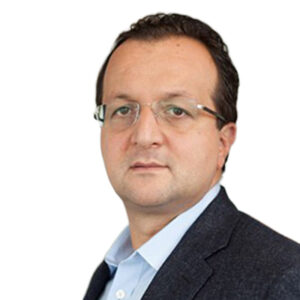
Thomas Hutter, Senior Manager of Global Supply Chain Programs & Analytics at a leading life sciences company at BD, Becton Dickinson, Vaud, leads a team of 30+ data scientists, developers, and solution architects. His work spans the full supply chain — from planning and sourcing to delivery — and he has hands-on experience building analytical capabilities, implementing Lean Six Sigma practices, and driving change in large, complex organizations.

The event will be opened and moderated by Prof. Paulo Gonçalves, Professor of System Dynamics and Management at USI and Director of the Humanitarian Operations Group. A PhD graduate of MIT Sloan and Research Fellow at the University of Cambridge Judge Business School, Prof. Gonçalves studies how managers make decisions under pressure — making him the ideal host for a conversation about organizational capability, supply chain resilience, and the human side of change.