
Agosto 24, 2026 | NEWS
15 September 2026 | 18:00–19:30 | USI Executive Center, Blue Room (also available online)
There comes a point in every career when progress is no longer just about working harder — it’s about thinking differently.
Many accomplished managers and entrepreneurs consider an Executive MBA at some stage. Yet even when the value is clear, hesitation often follows: Is this the right moment? How do I balance work, family and study? Will my company support the investment? Is it truly worth it?
If these questions sound familiar, EMBA Stories was designed for you.
An Evening of Honest Conversations
Rather than a standard information session, EMBA Stories brings together USI Executive MBA alumni and current participants to share what the brochures don’t: the real story behind their decision.
Expect candid insights on:
- What ultimately motivated them to pursue the programme
- The doubts and hesitations they had before enrolling
- How they approached the conversation with their employer
- How they balanced work, study and personal life
- The professional and personal impact the EMBA has had on their leadership path
Meet the Academic Director
Prof. Paulo Gonçalves, Academic Director of the USI Executive MBA, will join the discussion to answer your questions and share insights into the programme — followed by an open Q&A and a networking aperitif.
A Practical Takeaway
Every participant will receive our exclusive guide, “How to Discuss Your EMBA with Your Company” — a practical resource to support conversations with HR and senior management about sponsorship, study planning and organisational support.
Is This Evening for You?
Whether you’re actively exploring an Executive MBA or simply curious about your next professional chapter, EMBA Stories offers an honest look at what the journey really involves — directly from those who’ve lived it.
📍 USI Executive Center, Blue Room — also available online
🗓️ Tuesday, 15 September 2026
🕕 18:00–19:30
Free participation — registration required
Register Now → emba@usi.ch
Luglio 29, 2026 | NEWS
There comes a moment in every professional career when the next step is no longer about working harder—it is about thinking differently.
Many experienced managers and entrepreneurs consider pursuing an Executive MBA. Yet, despite recognising its value, they often hesitate. Is this the right time? How can I balance work, family and study? Will my company support the investment? Is it really worth it?
If these questions sound familiar, EMBA Stories was created for you.
On 15 September 2026 at 18:00, the USI Executive MBA invites prospective participants to an evening of authentic conversations with alumni and current participants who once faced exactly the same doubts.
Rather than a traditional information session, EMBA Stories offers something far more valuable: genuine experiences from professionals who transformed uncertainty into one of the most important decisions of their careers.
Throughout the evening, speakers will share:
- what motivated them to pursue an Executive MBA;
- the concerns they had before enrolling;
- how they approached the conversation with their employer;
- how they balanced work, study and personal life;
- the professional and personal impact the programme has had on their leadership journey.
The discussion will be joined by Prof. Paulo Gonçalves, Academic Director of the USI Executive MBA, who will answer questions and offer insights into the programme, followed by an open Q&A and networking aperitif.
To help participants prepare for the next step, everyone attending will also receive the practical guide “How to Discuss Your EMBA with Your Company”, developed to support conversations with HR departments and senior management about sponsorship, study planning and organisational support.
Whether you are actively considering an Executive MBA or simply exploring your future professional development, EMBA Stories is an opportunity to hear honest experiences, ask your questions and discover whether the USI Executive MBA could be your next step.
Event details
EMBA Stories – Real experiences. Real impact. Your next step.
Tuesday, September 15, 2026
6:00–7:30 p.m.
USI Executive Center, Blue Room
Participation is also available online.
Participation is free. Registration is required.
Luglio 15, 2026 | NEWS
From June 28 to July 4, 2026, participants of the USI Executive MBA traveled to Boston, one of the world’s most influential ecosystems for innovation, entrepreneurship, and academic excellence, for an immersive study tour that combined cutting-edge research, practical simulations, company visits, and cross-sector dialogue. The program, hosted primarily at Swissnex Boston and enriched by contributions from leading scholars and industry experts, prepared participants to face the challenges of an increasingly complex world — and by every measure, the week was a resounding success.
A Transformative Learning Experience
Throughout the week, participants took part in a carefully curated program exploring the interconnected dynamics that shape modern organizations, industries, and societies. Through lectures, workshops, simulations, and networking opportunities, executives gained new perspectives on leadership, innovation, sustainability, and strategic decision-making.
The tour opened with an in-depth exploration of Business Dynamics and Systems Thinking, led by internationally recognized experts from Harvard University and MIT Sloan. Participants learned how feedback loops, delays, and nonlinear interactions influence organizational performance, strategic growth, project execution, and long-term value creation. Through simulation models and real-world case studies, they built practical tools for understanding complexity and improving decision-making in dynamic environments.
A key theme running through the program was the ability to lead in uncertainty. Sessions explored how organizations can avoid capability traps, design more resilient strategies, and balance competing priorities such as growth, quality, cost, and time. By adopting a systems perspective, participants gained deeper insight into how leaders can anticipate unintended consequences and drive sustainable performance.
Innovation, AI, and Organizational Transformation
Innovation took center stage in sessions dedicated to emerging technologies, entrepreneurship, and organizational design. Participants examined the transformative impact of Agentic AI and its implications for business models, leadership, and competitive advantage.
Further discussions focused on innovation management and the different modes through which organizations create and scale new ideas. Drawing on expertise from leading academic institutions, participants explored how innovation ecosystems foster collaboration between startups, corporations, researchers, and investors, generating sustainable growth and long-term strategic value. An Innovation Trail and networking opportunities within Boston’s renowned entrepreneurial ecosystem gave participants firsthand exposure to one of the most vibrant innovation hubs in the world.
Sustainability and Climate Leadership
Sustainability remained a central pillar of the study tour. Through dedicated sessions on climate change, environmental systems, and resource management, participants examined the growing responsibility of leaders to navigate global sustainability challenges.
Interactive experiences such as the Sustainability Game and the EN-ROADS Climate Action Simulation allowed participants to explore the consequences of policy decisions, stakeholder actions, and strategic interventions across interconnected environmental, economic, and social systems. A special session featuring industry leaders working at the forefront of climate innovation further connected theory and practice, showing how organizations are translating sustainability ambitions into measurable impact.
An Evening at the Residence of the Swiss Consul
Among the many highlights of the week was a special evening at the official residence of Philippe Roesle, CEO of Swissnex in Boston and New York and Consul of Switzerland in Boston. Located in Lexington, Massachusetts — a town known for its rich historical heritage and close proximity to Boston’s thriving innovation ecosystem — the residence offered a unique setting for an evening of dialogue, networking, and cultural exchange.
Participants were welcomed with genuine warmth, and the evening became one of the most memorable moments of the entire tour. The USI Executive MBA extends its sincere gratitude to Philippe Roesle and the entire Swissnex team for their hospitality and for fostering meaningful connections between Swiss institutions and the academic, entrepreneurial, and innovation communities of the Greater Boston area.
Learning Beyond the Classroom
The study tour also included visits to organizations operating at the intersection of technology, research, and innovation. Participants engaged directly with experts from Helbling, a global leader in engineering and product development, gaining insights into how innovation is transformed into real-world solutions across industries including healthcare, robotics, and advanced technologies.
Networking receptions and informal exchanges with professionals, researchers, and innovators from the Boston ecosystem further enriched the experience, fostering valuable international connections and broadening participants’ understanding of global business challenges and opportunities.
A Week That Delivered on Its Promise
The USI EMBA Boston Study Tour 2026 offered far more than an academic experience. It gave executives a unique opportunity to challenge assumptions, expand their perspectives, and strengthen their ability to lead systemic transformation.
By combining rigorous academic insights, practical simulations, industry engagement, and international networking — including the memorable evening at the residence of the Consul of Switzerland — the program equipped participants with the tools needed to navigate complexity, foster innovation, and create sustainable value. Participants returned to Switzerland energized, inspired, and ready to apply what they had learned: a true testament to how leadership extends beyond the classroom.

Giugno 17, 2026 | NEWS
A Week of Systems Thinking, Innovation, and Sustainable Leadership
From June 28 to July 4, 2026, participants in the USI Executive MBA embark on an immersive study tour in Boston, one of the world’s most influential ecosystems for innovation, entrepreneurship, and academic excellence. Hosted primarily at Swissnex Boston and enriched by contributions from leading scholars and industry experts, the experience combines cutting-edge research, practical simulations, company visits, and cross-sector dialogue to prepare leaders for the challenges of an increasingly complex world.
A Transformative Learning Experience
Over the course of the week, participants engage in a carefully curated program exploring the interconnected dynamics that shape modern organizations, industries, and societies. Through lectures, workshops, simulations, and networking opportunities, executives gain new perspectives on leadership, innovation, sustainability, and strategic decision-making.
The study tour begins with an in-depth exploration of Business Dynamics and Systems Thinking, led by internationally recognized experts from Harvard University and MIT Sloan. Participants learn how feedback loops, delays, and nonlinear interactions influence organizational performance, strategic growth, project execution, and long-term value creation. Through simulation models and real-world case studies, they develop practical tools to better understand complexity and improve decision-making in dynamic environments.
A key theme throughout the program is the ability to lead in uncertainty. Sessions explore how organizations can avoid capability traps, design more resilient strategies, and balance competing priorities such as growth, quality, cost, and time. By adopting a systems perspective, participants gain deeper insight into how leaders can anticipate unintended consequences and drive sustainable performance.
Innovation, AI, and Organizational Transformation
Innovation takes center stage through sessions dedicated to emerging technologies, entrepreneurship, and organizational design. Participants examine the transformative impact of Agentic AI and its implications for business models, leadership, and competitive advantage.
Additional discussions focus on innovation management and the different modes through which organizations create and scale new ideas. Drawing on expertise from leading academic institutions, participants explore how innovation ecosystems foster collaboration between startups, corporations, researchers, and investors, generating sustainable growth and long-term strategic value.
The program also includes an Innovation Trail and networking opportunities within Boston’s renowned entrepreneurial ecosystem, offering firsthand exposure to one of the most vibrant innovation hubs in the world.
Sustainability and Climate Leadership
Sustainability remains a central pillar of the study tour. Through dedicated sessions on climate change, environmental systems, and resource management, participants examine the growing responsibility of leaders to navigate global sustainability challenges.
Interactive experiences such as the Sustainability Game and the EN-ROADS Climate Action Simulation allow participants to explore the consequences of policy decisions, stakeholder actions, and strategic interventions across interconnected environmental, economic, and social systems. These evidence-based simulations provide a powerful framework for understanding how collective action can accelerate meaningful climate solutions.
A special session featuring industry leaders working at the forefront of climate innovation further connects theory and practice, demonstrating how organizations are translating sustainability ambitions into measurable impact.
Learning Beyond the Classroom
The study tour extends beyond academic sessions through visits to organizations operating at the intersection of technology, research, and innovation. Participants engage directly with experts from Helbling, a global leader in engineering and product development, gaining insights into how innovation is transformed into real-world solutions across industries including healthcare, robotics, and advanced technologies.
The program is further enriched by networking receptions and informal exchanges with professionals, researchers, and innovators from the Boston ecosystem. These interactions foster valuable international connections and broaden participants’ understanding of global business challenges and opportunities.
Key Learning Objectives
The Boston Study Tour 2026 reinforces several core pillars of the USI Executive MBA:
- Systems Thinking and Business Dynamics: Understanding complexity, feedback systems, and strategic decision-making.
- Innovation and Entrepreneurship: Exploring emerging technologies, AI-driven transformation, and innovation ecosystems.
- Strategic Sustainability: Integrating environmental responsibility into long-term business strategy.
- Climate Leadership: Developing the skills needed to navigate global sustainability challenges.
- Organizational Resilience: Building adaptive organizations capable of thriving in uncertain environments.
- Global Networking: Connecting with leading academics, practitioners, and innovators in one of the world’s foremost centers of innovation.
Leading in a Complex World
The USI EMBA Boston Study Tour 2026 offers far more than an academic experience. It provides executives with a unique opportunity to challenge assumptions, expand their perspectives, and strengthen their ability to lead systemic transformation.
By combining rigorous academic insights, practical simulations, industry engagement, and international networking, the program equips participants with the tools required to navigate complexity, foster innovation, and create sustainable value. In a world increasingly shaped by interconnected challenges, the Boston Study Tour empowers leaders to think differently, act strategically, and drive meaningful impact.
Maggio 31, 2026 | NEWS, OPEN DAY
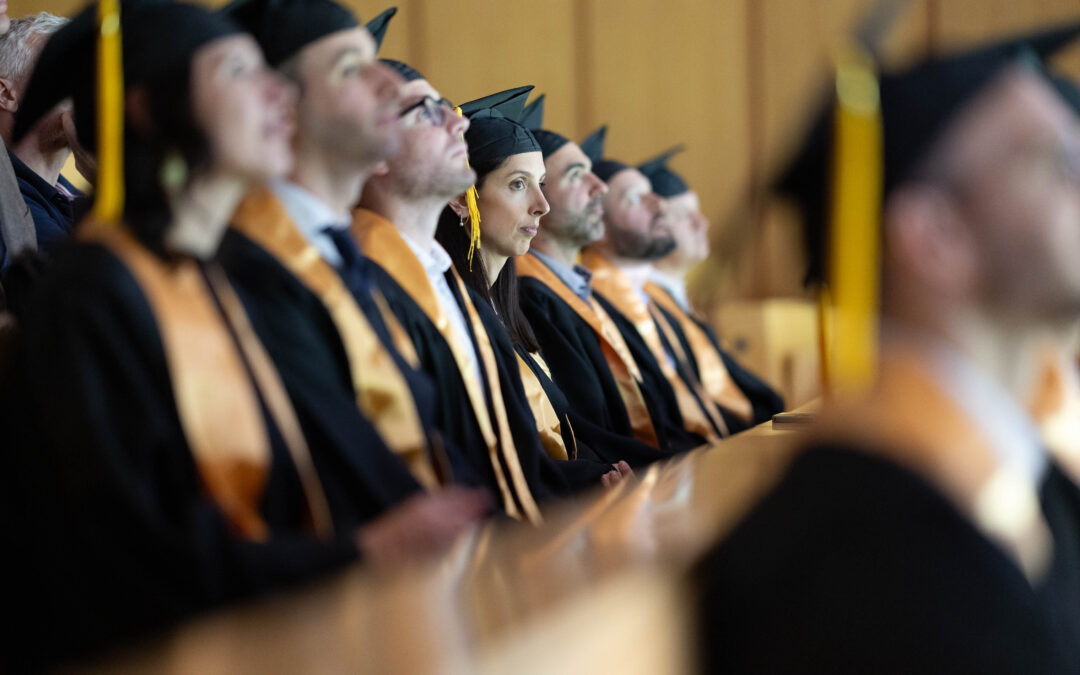
On Saturday, 23 May 2026, the Auditorium of the Università della Svizzera italiana hosted the graduation ceremony for the thirteenth edition of the Executive Master in Business Administration (EMBA). The event marked a major milestone for the participants, who successfully completed an intensive academic and professional journey, sharing this achievement with family, friends, Faculty, and members of the USI community.
The ceremony opened with an address by the EMBA Academic Director, Professor Paulo Gonçalves, who highlighted the value of lifelong learning, responsible leadership, and the ability to navigate constantly evolving economic and organisational landscapes. A Full Professor of Management at USI, Prof. Gonçalves earned his PhD in Management Science from the MIT Sloan School of Management. He has been teaching at USI for over fifteen years, focusing his research on system dynamics simulation, behavioural experiments, and econometrics, while also collaborating on numerous international humanitarian projects dedicated to strategic emergency and resource management.
A particularly meaningful highlight of the evening featured addresses by two USI EMBA Alumni—now established professionals in their respective fields—who shared their managerial and personal insights with the graduates.
Samantha Caccamo, Founder & CEO of Social Business Earth and an EMBA8 Alumna, spoke about her international career in social entrepreneurship and sustainable development. In her speech, she emphasised the importance of authentic leadership driven not only by economic value creation but also by social and environmental impact. Drawing from her own professional journey, she invited the graduates to leverage the managerial skills developed during the Executive MBA to champion sustainable and responsible business models.
Next, Matthias Anderegg, Market Area Manager for UBS Switzerland AG in Corporate Banking and an EMBA12 Alumnus, shared his reflections on resilience within the banking and financial sector. Drawing on his extensive background in corporate banking, Matthias Anderegg highlighted how the EMBA programme helped shape his decision-making, managerial, and interpersonal skills within increasingly complex and dynamic professional environments.
During the ceremony, participants from the EMBA 2024–2026 class, representing diverse professional and cultural backgrounds, were officially awarded their diplomas. The cohort brings together professionals active across finance, insurance, energy, manufacturing, infrastructure, healthcare, education, research, law, and technology, underscoring the interdisciplinary and international character of the programme.
The graduates, along with their nationalities and corporate base locations, are listed below:
- Daniel Andjelkovic, Switzerland, Switzerland
- Fabio Amicarelli, Italy, Switzerland
- Brian Bottanelli, Italy, Italy
- Stefano Briguglio, Italy, Switzerland
- Matteo Calzascia, Switzerland, Switzerland
- Elisa Cordì, Italy, Switzerland
- Alessandro D’Amario, Switzerland, Switzerland
- Ilaria Eccetto, Italy, Switzerland
- Carlo Ercole, Italy, Switzerland
- Andrea Foglia, Switzerland, Switzerland
- Stefano Giacomelli, Italy, Switzerland
- Simona Lorenzi, Italy, Switzerland
- Devis Meroni, Switzerland, Switzerland
- Denise Peretti, Italy, Italy
- Aramis Sardi, Switzerland, Switzerland
The audience particularly enjoyed the final presentation by the EMBA13 participants. In an engaging and lively speech, they looked back at their eighteen months in the programme, recalling the intensive weekends, group work, assignments, international study tours, and personal growth. The speech highlighted key themes, including collaboration, team spirit, adaptability, leadership, and the invaluable support from families and colleagues along the way.
Following the presentation of diplomas, participants and guests gathered for a standing drinks reception—a perfect opportunity to strengthen professional networks and celebrate the milestone together.
The USI Executive Master in Business Administration continues to champion development and innovation, offering experienced professionals an advanced, weekend-format management education designed to balance academic growth with ongoing professional careers.

Maggio 13, 2026 | NEWS, OPEN DAY
Event Details
📅 Monday, 8 June 2026
🕕 18:00
📍 USI Executive Center, Lugano
To enroll, please write to: emba@usi.ch
In periods of uncertainty and rapid transformation, maintaining the status quo is no longer enough. Organizations today need leaders capable of rethinking traditional models, navigating complexity, and transforming disruption into opportunity.
USI Executive MBA is pleased to invite professionals, entrepreneurs, executives, and alumni to an exclusive evening discussion exploring how visionary leaders become true “game changers” in times of crisis — driving innovation, resilience, and sustainable impact across industries.
The session will bring together speakers with international experience in leadership, organizational transformation, human capital, and industrial management, offering practical insights into how organizations and individuals can cultivate adaptability, strategic thinking, and transformative leadership in uncertain environments.
A unique conversation on leadership, transformation, and the courage to rethink business in times of disruption.
Speakers
Christian Burkhalter
Global Head of HR / Digital HR Transformation / Lean & Agile Approach at Casale SA. With more than 20 years of international experience in human resources, organizational transformation, digital HR, and AI-driven change management, Christian has led strategic initiatives in talent development, leadership culture, continuous improvement, and diversity & inclusion across multinational organizations.
Judith Eberl
Senior Coach and Facilitator. Judith is the Managing Director of YouEvolve GmbH and has over 20 years of experience in organizational development across multinational organizations in the insurance, financial, and retail sectors throughout Europe and the Asia Pacific region. She specializes in leadership development, coaching, transformation, and sustainable business performance, helping leaders and teams prepare for future challenges and opportunities.

Michele Matis
CEO of Plastifil SA and senior executive with over 30 years of operational leadership experience in manufacturing, supply chain, food, and medtech industries across Switzerland, Italy, Germany, and France. He has developed an extensive commercial network among industrial SMEs and C-suite decision-makers across the DACH region, France, Italy, and Switzerland. Michele is also President of the Ticino section of the Swiss Shippers Council, active member of Swiss Medtech Ticino, member of the Advisory Board of AIFt, and Executive MBA alumnus of Università della Svizzera Italiana (USI).
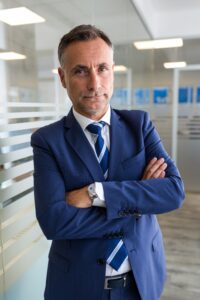
Moderator
Prof. Paulo Gonçalves
Professor of System Dynamics and Management at USI and Director of the Executive MBA at USI. Research Fellow at the University of Cambridge Judge Business School and former Research Affiliate at MIT Sloan School of Management. His research combines System Dynamics Simulation, Behavioral Experiments, and Econometrics to understand managerial decision-making in complex and humanitarian settings. He holds a Ph.D. and M.Sc. from MIT Sloan and has received several international awards for his research in supply chain management and operations.