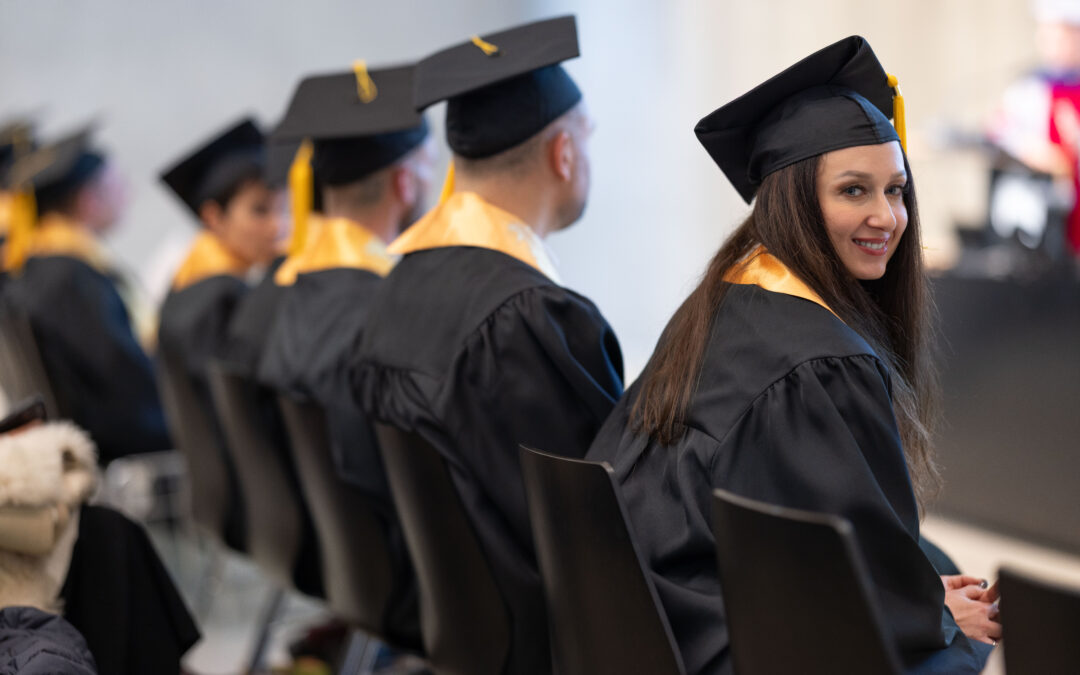
Fifteen edition, one idea

Fifteen edition, one idea

Fifteen editions, one idea

In 2011, a small group of managers walked into a classroom on the USI campus in Lugano. They had busy jobs, families, and very good reasons not to go back to school. They came anyway. That was the first cohort of the USI Executive MBA.

In a few weeks, the fifteenth cohort will walk into the same building and do the same thing.

Fifteen editions is a milestone worth pausing on. Not to celebrate the number, but to ask a more useful question: after fifteen years, what has changed, and what has stayed exactly the same? The answer says a lot about what an Executive MBA is for, and about why it still matters.

What fifteen years have changed

Think back to 2011. Smartphones were still new in the boardroom. Remote work was a perk for a lucky few. Artificial intelligence was a research topic, not an item on the agenda of every leadership meeting. Sustainability, if it appeared at all, was a chapter near the end of the strategy textbook.

Today, a manager deals with all of this before lunch. Teams are distributed across countries and time zones. Supply chains that once felt solid can break in a week. Investors, customers and employees expect companies to explain not only what they earn, but how they earn it. And AI is changing how decisions are made, sometimes faster than organizations can adapt.

The USI Executive MBA has changed with that world.  Sustainability and digital transformation moved from the margins to the core of the curriculum. An international module in Boston became part of the journey. And the structure evolved into a hybrid model built around monthly weekend sessions in Lugano, combined with self-paced learning, so that participants never have to step away from their jobs.

A program that looked the same in 2026 as it did in 2011 would have failed its participants. Change was never optional.

What hasn’t changed at all

And yet, looking back across fifteen editions, the things that matter most are exactly the same as on day one.

Small classes, by choice

We have never wanted a lecture hall. Class sizes are deliberately limited, and that is a decision, not a constraint. In a small cohort nobody hides in the back row. Discussions go deeper, faculty know your name and your business, and the class slowly turns into something closer to a team than an audience. Many alumni say this is what surprised them most.

Theory that meets real work

An Executive MBA is not a place to collect frameworks. It is a place to test them against reality. Every month, senior managers from companies in the region join the class to discuss the challenges they are facing right now, not ten years ago. Participants bring their own organizations into the room, work on their own problems, and take what they learn back to the office on Monday morning. The best measure of the program has always been what changes at work, not what goes on a transcript.

A network that lasts

Ask alumni what they value most a few years after graduation, and many will not mention a course. They will mention people. The classmate who became a business partner. The one who opened a door in another country. The one they still call when a decision feels too big to make alone. Through the USI EMBA Club and the wider USI alumni community, that network keeps growing long after the last module.

What’s new with EMBA 15: three generations in one room

With the fifteenth edition we are taking the idea of the network one step further.

Two elective courses in EMBA 15 will be shared with the previous cohort and with the next one. In practice, participants will sit in the same classroom as people who started before them and people who will start after them. Three generations of the program, working on the same problems together.

Why does this matter? Because a cohort that only talks to itself has a natural limit. Those who are a year ahead can tell you what is coming and which choices they would make differently. Those who join after you bring fresh questions and a different moment in their careers. Your network does not start and end with your classmates: it extends backwards and forwards from day one.

After fifteen editions, it felt like the right way to make the most of what the program has built so far.

Is this the right moment for you?

The USI Executive MBA is designed for managers and entrepreneurs with solid professional experience who want to grow without pressing pause on their careers. Some want to move from a functional role to general management. Some are taking over a family business. Some are building a company of their own. Others simply feel that the way they lead today will not be enough for the next ten years.

If any of that sounds familiar, the honest truth is that there is rarely a perfect moment. There is always a project to close, a reorganization coming, a reason to wait until next year. Most of our alumni started anyway, and very few regret it.

EMBA 15 at a glance

  • Start: 20 November 2026
  • Duration: 18 months, until May 2028
  • Format: hybrid, with monthly weekend modules in Lugano and an international module in Boston
  • Language: English
  • Degree: MAS Degree, Executive Master in Business Administration, 60 ECTS

A few places are still available, and admissions are rolling until the class is complete. If you have been thinking about it for a while, now is the time to start the conversation.

Fifteen editions in, the idea is still the same: bring experienced people together, give them the tools to lead what comes next, and let them learn as much from each other as from us. We can’t wait to meet the fifteenth cohort.


From Good to Great – Workshop 16.10

From Good to Great – Workshop 16.10

From Good to Great

Friday 16 October (17:30 – 19:30)

To enroll, please write to: emba@usi.ch 

Inspired by Jim Collins’ renowned book Good to Great, this interactive workshop will explore how Disciplined People, Disciplined Thought, and Disciplined Action can drive sustained organizational success.

Speaker

Paulo Gonçalves is Professor of System Dynamics and Management at USI and Director of the Executive MBA. He is a Research Fellow at the University of Cambridge Judge Business School (CJBS) and a former Research Affiliate at the MIT Sloan School of Management.

His research combines System Dynamics Simulation, Behavioral Experiments, and Econometrics to understand how managers make decisions in humanitarian settings. Currently, he has been developing supply chain experiments to understand and improve managerial decisions in humanitarian operations.

He holds a Ph.D. in System Dynamics and Management Science from MIT Sloan and a M.Sc. from MIT. Prior to USI, prof. Gonçalves held appointments at the MIT Sloan School of Management and the University of Miami Graduate School of Business.

While at Sloan, Paulo worked with Intel’s Strategic Capacity group as an Intel scholar. For his work, he has received the Intel Foundation Graduate Research Fellowship Award (2003-2004). For his dissertation, he has won the 2004 Doctoral dissertation award given annually by the Council of Supply Chain Management Professionals (CSCMP).


Don’t Wait: Why Now Is the Time for Your Executive MBA

Don’t Wait: Why Now Is the Time for Your Executive MBA

The best time to start your Executive MBA is the next intake, not “someday.” Every year you postpone is a year of decisions made without the tools, the network, and the perspective you could already have.

Most experienced professionals don’t say no to an EMBA. They say “not yet.” Next year, after the big project, when things calm down. But careers rarely calm down, and the cost of waiting is quiet: it shows up as opportunities you didn’t see, problems you solved the hard way, and promotions that went to someone better prepared.

The right moment never comes

Ask any EMBA graduate when they felt ready to start, and most will tell you the same thing: they never did. They started anyway, and found that the program made their busy schedule easier to handle, not harder.

Waiting feels safe, but it has a price. Every month without a strategic toolkit is a month of challenges tackled by instinct alone. What you learn in an EMBA keeps paying back long after graduation, so the sooner you start, the more you gain from it.

Built for people who are already busy

The USI EMBA was designed for professionals who cannot step away from their jobs. It is an 18-month, 60 ECTS Advanced Master in Management, taught in English at Università della Svizzera italiana in Lugano.

Each month follows the same rhythm: one day of self-study, then Saturday and Sunday on campus, with no classes in August. A Friday evening workshop opens each module, on topics such as managing emotions, communication, and difficult behavior in negotiations. You keep your role, your income, and your momentum while you study.

Learning you use on Monday

Because you study while you work, every module feeds straight back into your job. A weekend on negotiation, finance, or operations management becomes a better meeting, a sharper budget, or a stronger supply chain decision the following week.

The curriculum covers 11 core courses, from strategy and entrepreneurship to business analytics, economics, and leadership, plus 3 electives. Teaching relies on real case studies, team projects, and business simulations. It ends with a final project carried out inside your own organization, where you act as an internal consultant on a real challenge under the guidance of a USI professor. That project turns your tuition into a direct return for your company.

Your network grows with every month you’re in it

Relationships compound. The earlier you build them, the longer they work for you. USI EMBA classes are small and deliberately diverse, bringing together participants from many industries, countries, and backgrounds.

Two electives are shared with the previous and the next cohort, so you study alongside three generations of the program. Over 13 editions, the EMBA has graduated 162 professionals. Joining now puts you in that community years earlier than if you wait.

The leadership the world needs now

Business is changing fast: artificial intelligence, climate risk, ESG reporting, and fragile supply chains are today’s agenda, not tomorrow’s. The USI EMBA puts ethics, sustainability, and innovation at the center, with electives such as Business applications of artificial intelligence, ESG Reporting, and Leading organizational change.

In July, the international study tour takes you to Boston for six intensive days at institutions including MIT, Harvard, and Tufts. You explore systems thinking, design thinking, sustainable finance, and circular economy models, and visit innovation hubs such as the MIT CAVE Lab. Leaders who learn these skills now will shape the next decade; those who wait will spend it catching up.

Don’t wait for someday

USI EMBA 15 starts in November 2026 and runs until May 2028. Eighteen months from now, you could be presenting your final project, leading with new confidence, and drawing on a network across Europe and beyond. Or you could still be waiting for the right moment.


Being Creative – A Workshop on Understanding Idea Generation and Tools to Improve It | 25.09

Being Creative – A Workshop on Understanding Idea Generation and Tools to Improve It | 25.09

Being Creative – A Workshop on Understanding Idea Generation and Tools to Improve It 
Friday 25 September (17:30 – 19:30)

To enroll, please write to: emba@usi.ch 

Participate in “Being Creative – A Workshop on Understanding Idea Generation and Tools to Improve It,” a session dedicated to understanding the mechanics of creativity and discovering practical tools to boost it, both at an individual and organizational level.

Speaker

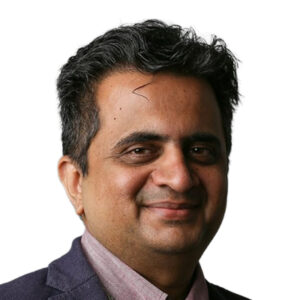
Kandarp Mehta is a PhD from IESE Business School, Barcelona. He has been with the Entrepreneurship Department at IESE since October 2009.
His research has focused on creativity in organizations and negotiations. He frequently works as consultant with startups on issues related to Innovation and Creativity. His doctoral thesis was about the process of creativity in the context of motion picture industry.
He has conducted several Negotiation and Creativity Workshops for corporate executives and management students in Europe, USA and India. Before coming to Spain, he was at ICFAI Business School in India where he taught Corporate Finance. He is also actively involved with Creative Industries.


AI at Scale: When to Control, When to Let Go. EMBA Talks on 08.09, 12:30

AI at Scale: When to Control, When to Let Go. EMBA Talks on 08.09, 12:30

EMBA Talks | 8 September 2026 | 12:30 PM (Online)
Registration

To enroll, please write to: emba@usi.ch to receive the Zoom link.

We envision EMBA Talks as a series of events that combine academic expertise with open dialogue, focusing on relevant and timely topics in management, finance, marketing, society, and leadership.
Each session centers on a key theme and features an EMBA professor or EMBA alumni, who introduce the topic through a short presentation followed by an interactive discussion with participants. The goal is to create a space where ideas can be shared, challenged, and explored together.


AI at Scale: When to Control, When to Let Go

Scaling AI is no longer primarily a technology challenge, it is an organisational one. Drawing on our research with organisations at the forefront of AI adoption, including Microsoft, Nasdaq, Barclays and the Abu Dhabi Department of Finance, and on my recent MIT Sloan Management Review article on adaptive AI governance, this session offers senior leaders a practical framework for deciding what to govern, how much governance is enough, and where accountability should sit as AI becomes embedded in critical decisions and workflows. We will explore how to identify emerging governance gaps, design fit-for-purpose controls, and build the decision processes and capabilities required to scale AI with confidence.

Speaker

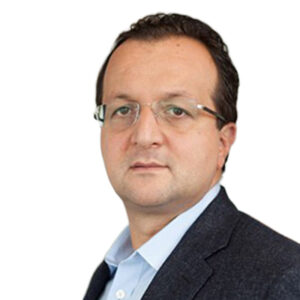
Gianvito Lanzolla is Professor of Strategy and Digital Transformation at Bayes Business School, City, University of London, which he joined in April 2006. From January 2016 to December 2020, he served as Dean of the Faculty of Management. Gianvito is the Founding Director of the Bayes Digital Leadership Research Centre (DLRC). Before joining Bayes, Gianvito was a Research Fellow on the Faculty of the London Business School. Over the years, he has had several visiting appointments at leading business schools including the London Business School, INSEAD, Hyderabad’s Indian School of Business and Berlin’s ESMT. From January 2016, Gianvito is a Fellow of the Royal Society of the Arts (RSA). In 2020, Gianvito was nominated “Cavaliere” (“knight”) by the President of the Italian Republic.

Gianvito has contributed as an advisor to owners, boards, CEOs and executive leadership teams around the world. Corporate engagements include: Apple, Vodafone (Group, India, Egypt and UK), Ericsson, NOKIA, Microsoft, BBC, Axel Springer, DePersgroep, IBM, Syngenta, MakeUK, Schott, Johnson & Johnson, McKesson, Beazley, the UAE’s Prime Minister Office, Abu Dhabi Ports Authority, Mizuho, Zurich, KION, Vailant, Alix Partners, Alturki Holding and Nesma and Partners. Gianvito is a Non-Executive Director on the Board of a large industrial conglomerate and on the Sustainability Board of University of London.

Gianvito studies the impact of technological and institutional change on competitive dynamics, firm strategy and firm organization. His articles have appeared in leading outlets including: Academy of Management Journal, Academy of Management Review, Production and Operations Management, Long Range Planning, Journal of Management, Journal of Management Studies, Journal of Product Innovation Management, Business Strategy Review, Business History, Academy of Management Review, California Management Review, and Harvard Business Review. Gianvito’s research has won several academic prizes and has been widely featured in the business media – e.g. Financial Times, the Economist, CNBC, CCTV, Wall Street Journal – and in policy papers. His latest book (with C. Markides) is on “Corporate Diversification in the Digital Age” (Cambridge University Press, Summer 2024).

He has delivered more than 100 keynotes speeches to corporate and policy audiences. An accomplished executive instructor, Gianvito teaches “Strategic Leadership”, “Diversification and Growth”, “Strategy Execution”, “Digital Innovation in Action / Silicon Valley” and “Leading Digital Transformation” to Executive and Full-Time MBA students, both in Cass’s London and Dubai campuses. He has yearly been awarded several teaching excellence prizes.

Gianvito holds an MSc in Mechanical Engineering (Dean’s list) and a PhD in Strategic Management. Before joining academia, he was the founder and managing director of “e-change ltd”, an e-business transformation provider which in 2002 he sold to a leading software company.

This initiative is part of https://ai-weeks.ch/ , the Largest open movement for artificial intelligence.


Executive Master in Business Administration 13 Graduation Ceremony

Executive Master in Business Administration 13 Graduation Ceremony

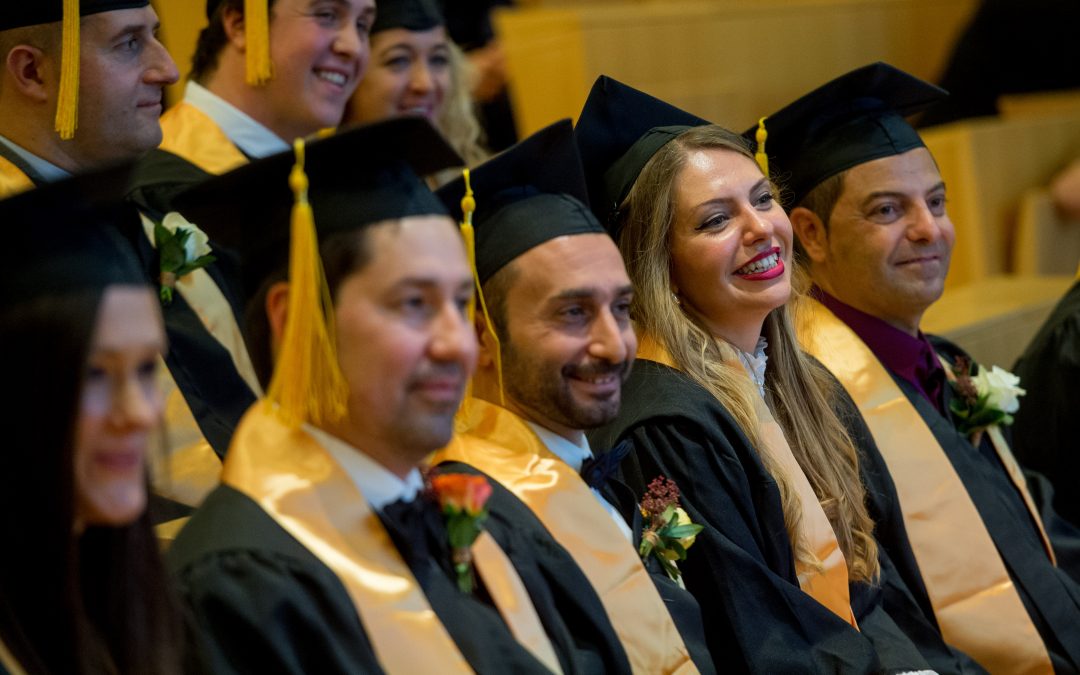
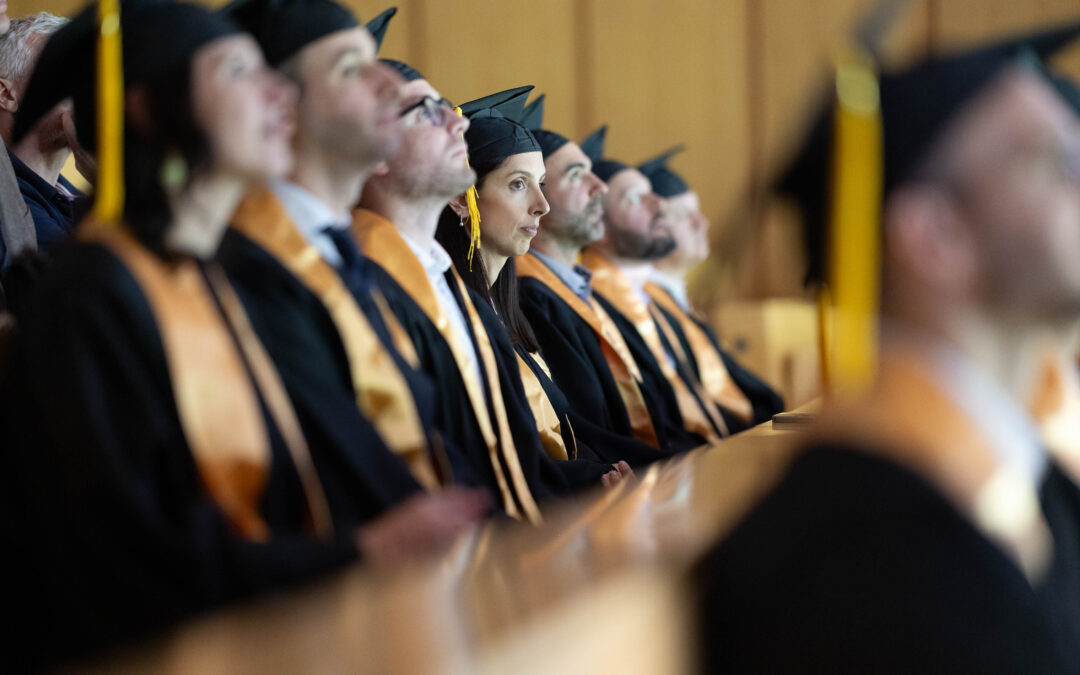
On Saturday, 23 May 2026, the Auditorium of the Università della Svizzera italiana hosted the graduation ceremony for the thirteenth edition of the Executive Master in Business Administration (EMBA). The event marked a major milestone for the participants, who successfully completed an intensive academic and professional journey, sharing this achievement with family, friends, Faculty, and members of the USI community.

The ceremony opened with an address by the EMBA Academic Director, Professor Paulo Gonçalves, who highlighted the value of lifelong learning, responsible leadership, and the ability to navigate constantly evolving economic and organisational landscapes. A Full Professor of Management at USI, Prof. Gonçalves earned his PhD in Management Science from the MIT Sloan School of Management. He has been teaching at USI for over fifteen years, focusing his research on system dynamics simulation, behavioural experiments, and econometrics, while also collaborating on numerous international humanitarian projects dedicated to strategic emergency and resource management.

A particularly meaningful highlight of the evening featured addresses by two USI EMBA Alumni—now established professionals in their respective fields—who shared their managerial and personal insights with the graduates.

Samantha Caccamo, Founder & CEO of Social Business Earth and an EMBA8 Alumna, spoke about her international career in social entrepreneurship and sustainable development. In her speech, she emphasised the importance of authentic leadership driven not only by economic value creation but also by social and environmental impact. Drawing from her own professional journey, she invited the graduates to leverage the managerial skills developed during the Executive MBA to champion sustainable and responsible business models.

Next, Matthias Anderegg, Market Area Manager for UBS Switzerland AG in Corporate Banking and an EMBA12 Alumnus, shared his reflections on resilience within the banking and financial sector. Drawing on his extensive background in corporate banking, Matthias Anderegg highlighted how the EMBA programme helped shape his decision-making, managerial, and interpersonal skills within increasingly complex and dynamic professional environments.

During the ceremony, participants from the EMBA 2024–2026 class, representing diverse professional and cultural backgrounds, were officially awarded their diplomas. The cohort brings together professionals active across finance, insurance, energy, manufacturing, infrastructure, healthcare, education, research, law, and technology, underscoring the interdisciplinary and international character of the programme.

The graduates, along with their nationalities and corporate base locations, are listed below:

  • Daniel Andjelkovic, Switzerland, Switzerland
  • Fabio Amicarelli, Italy, Switzerland
  • Brian Bottanelli, Italy, Italy
  • Stefano Briguglio, Italy, Switzerland
  • Matteo Calzascia, Switzerland, Switzerland
  • Elisa Cordì, Italy, Switzerland
  • Alessandro D’Amario, Switzerland, Switzerland
  • Ilaria Eccetto, Italy, Switzerland
  • Carlo Ercole, Italy, Switzerland
  • Andrea Foglia, Switzerland, Switzerland
  • Stefano Giacomelli, Italy, Switzerland
  • Simona Lorenzi, Italy, Switzerland
  • Devis Meroni, Switzerland, Switzerland
  • Denise Peretti, Italy, Italy
  • Aramis Sardi, Switzerland, Switzerland

The audience particularly enjoyed the final presentation by the EMBA13 participants. In an engaging and lively speech, they looked back at their eighteen months in the programme, recalling the intensive weekends, group work, assignments, international study tours, and personal growth. The speech highlighted key themes, including collaboration, team spirit, adaptability, leadership, and the invaluable support from families and colleagues along the way.

Following the presentation of diplomas, participants and guests gathered for a standing drinks reception—a perfect opportunity to strengthen professional networks and celebrate the milestone together.

The USI Executive Master in Business Administration continues to champion development and innovation, offering experienced professionals an advanced, weekend-format management education designed to balance academic growth with ongoing professional careers.